This page provides essential supporting documentation for the oDynamo, including industry magnetic stripe card standards, a white paper on cryptographic algorithm transitions, and a technical bulletin on proper device maintenance and debris removal.
Reference Section
Information Available
Common technical details for magnetic stripe cards.
A white paper that addresses NIST Special Publication 800-131A regarding the transition away from Two-Key TDEA encryption, outlining MagTek's approach to cryptographic algorithm migration.
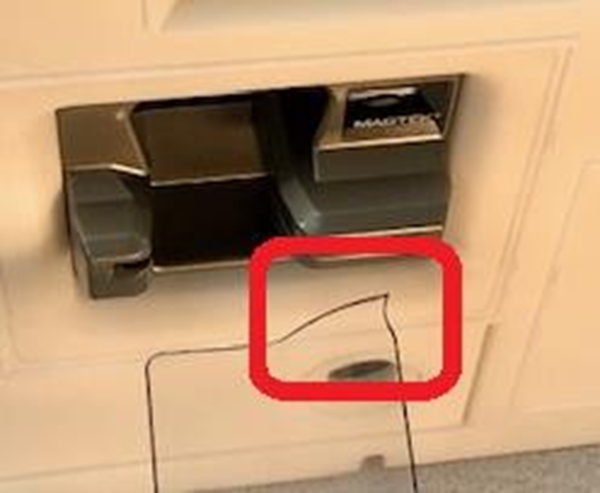
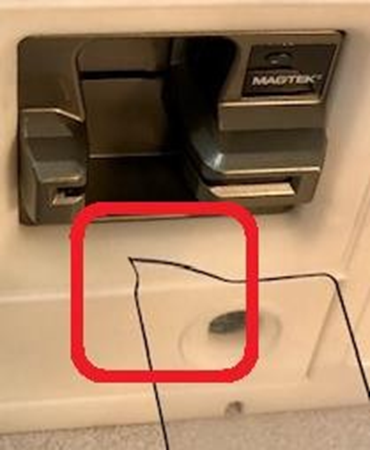
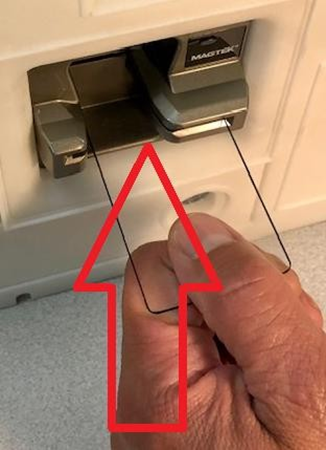
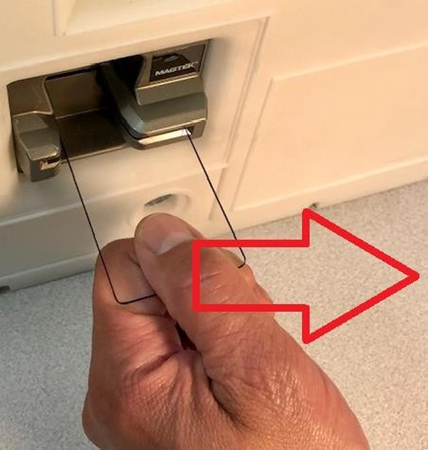
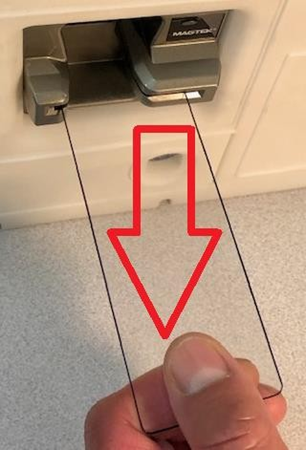
A technical bulletin that provides illustrated step-by-step instructions for correctly using the MagTek debris clearing tool to remove accumulated debris from the oDynamo's card insertion slot, helping to maintain device functionality and prevent mechanical damage.
Need Help?
For additional support, please contact MagTek Support:
Technical Support:
📧 Email: support@magtek.com
📞 Phone: 1-562-546-6800 (US)
🕐 Hours: Monday-Friday, 5:30 AM - 5:00 PM PST
Online Resources:
🌐 Support Portal: developer.magtek.com
Documentation Feedback:
Help us improve this documentation!
This document provides instructions for using MagTek’s debris clearing tool to perform regular maintenance cleaning of the oDynamo card insertion slot. For additional support, contact MagTek Support Services.
1000007173 CLEANING KIT, CARD SLOT DEBRIS CLEARING TOOL, ODYNAMO contains the debris clearing tool and these instructions. For more intensive cleaning, consider 1000007139 CLEANING KIT, CARD SLOT, ODYNAMO, which includes additional tools and materials.
To clean the oDynamo card insertion slot using the MagTek debris clearing tool, follow these steps. MagTek recommends performing this preventive maintenance regularly, depending on usage of the devices you are cleaning. Ideally maintenance would be performed before debris accumulates and renders the device non-functional:
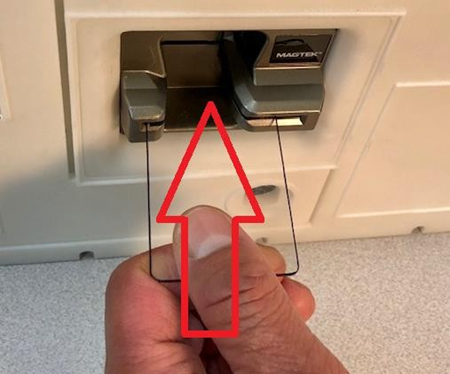
Gather one of the debris cleaning tools from the kit. Turn the tool so its hook corner is on the right side, pointing toward the card insertion slot.
Push the tool straight into the card insertion slot all the way until you feel it touch the back wall.
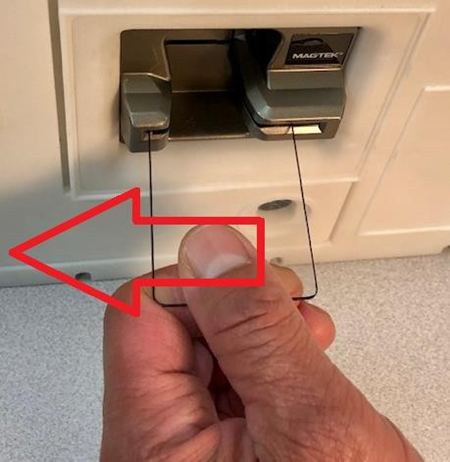
Push the butt end of the tool to the left. This pivots the tool inside the device and pushes the hook against the back right corner of the card insertion slot.
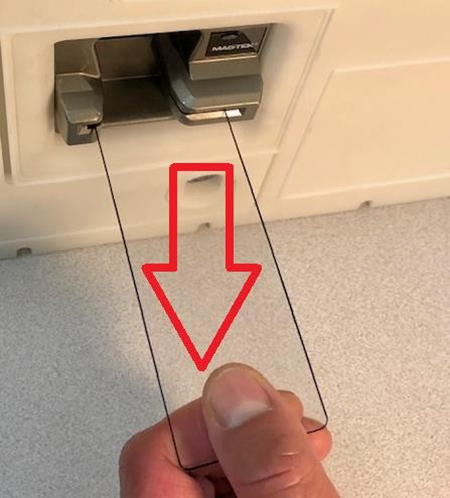
Continue pushing the tool to the left so it stays engaged with the right wall of the slot, and slowly pull the tool out, scraping the right wall of the card insertion slot clean as you pull.
Repeat the scraping motion 2-3 times.
Turn the tool over so the hook points to the left, and repeat the same steps 2-3 times.
April 8, 2019
Dear MagTek Customers,
In March 2019, NIST (National Institute of Standards and Technology) released a document entitled: “NIST Special Publication 800-131A Revision 2 – Transitioning the Use of Cryptographic Algorithms and Key Lengths1”. In that document, it states that the use of “Two-Key TDEA Encryption” has been listed as a “Disallowed” operational mode. This NIST document has raised concerns with our customers regarding the use of Two-Key TDEA Encryption within our products.
As a security leader, it is our intent to provide relevant information and guidance on this subject to our customers, and we can advise as follows:
At present time, “Two-Key TDEA Encryption” is currently the most widely used encryption method in the electronic payments and financial services sectors. It is used to protect both PIN and PAN payment data, and is used by most of the leading secure payment devices and payment networks deployed today.
As of this date there have been no successful attacks upon Two-Key TDEA Encryption that have resulted in the compromise of payment data encrypted under this mode. As such, Two-Key TDEA Encryption remains fully approved for use by both the ANSI X9 (American National Standards X9 - Financial Services) standards group and the PCI Security Standards Council.
MagTek customers who are currently using our products in the “Two-Key TDEA Encryption” mode can rest assured that the recent NIST announcements have no impact on security requirements within the Financial Services or Electronic Payments business sectors. As such, there is no need to make any changes to your MagTek products or encryption modes at this time.
It should be noted that the NIST recommendations only apply to Federal Agencies and their Information Systems. Commercial sector financial services are exempt from the NIST directives and are best served by following the ANSI X9 and PCI security standards organizations for recommendations on encryption requirements for payment data.
In regard to Two-Key TDEA Encryption for Transport Layer Security (TLS), PCI advised on this matter during a November 2017 blog entitled: “2”.
In that discussion, PCI acknowledges that the strength of Two-Key TDEA Encryption is under review and is no longer considered as “strong cryptography” by NIST. Further, PCI mentions that when NIST formally declares
MagTek, Inc. | 1710 Apollo Court | Seal Beach, CA 90740 | p. 562-546-6400 | f. 562-546-6301 |
Registered to ISO 9001:2015 © Copyright 2019 MagTek, Inc. PN D998200305 rev 10 4/19
Two-Key TDEA Encryption as “fully disallowed” it will no longer be considered “strong cryptography” by PCI SSC. Now that NIST has formally declared such (as of March 2019), the payment industry will need to await PCI’s further guidance on this subject.
In the interim, PCI has recommended that organizations begin planning their transition towards AES-128, yet acknowledges that due to legacy considerations this transition may take place over a long period of time.
Additionally, PCI recommends the use of several mitigation techniques to reduce risk. One of those measures is to “Change TDEA keys regularly…every 256 transactions or daily, whichever is more frequent”. In regard to this recommendation, MagTek can advise that our products utilize DUKPT (Derived Unique Key Per Transaction), a far more rigorous key management method. DUKPT ensures that a different key is generated for each and every transaction, taking PCI’s recommendation for frequent key changes to the maximum level.
Looking ahead, both the ANSI X9 and PCI Security Standards Council are establishing standards and transition paths towards the adoption of AES-128 as the successor to TDEA for encryption of payment data.
However, due to the proven security of TDEA, legacy concerns, and logistical considerations, it is anticipated that this transition will take place over the next 4-10 years. The earliest transition milestone will be the end of PCI support for TDEA PIN encryption using fixed-key management by Jan 1, 2023.
It is important to note that this milestone does not apply to the use of TDEA PIN encryption using DUKPT (Derived Unique Key Per Transaction) key management. As such, it is very likely that there will be a long transition period where both Two-Key TDEA DUKPT and AES128 DUKPT encryption methods will be used concurrently for the foreseeable future. (See table below for upcoming security milestones.)
As a security leader in the electronic payments industry, MagTek is moving forward with implementation of AES-128 DUKPT into our products and security services. In the meantime, we will continue to support Two-Key TDEA DUKPT encryption in our products for however long the payments industry requests it, and/or the relevant security standards support it.
As always, MagTek will continue to keep our customers informed on these matters and provide clear guidance as new security trends and requirements emerge.
If you have any further questions, please contact your MagTek Sales Representative or me and we will be happy to answer any questions you may have.
Sincerely,
Larry Meyers
Vice President, Qwantum Secure Media MagTek, Inc
1710 Apollo Court Seal Beach, CA 90740 562-546-6400
About MagTek
Founded in 1972, MagTek is a leading manufacturer of electronic systems for the reliable issuance, reading, transmission and security of cards, checks, PINs and identification documents. Leading with innovation and engineering excellence, MagTek is known for quality and dependability. Its products include secure card reader/authenticators, token generators, EMV contact, contactless and NFC reading devices, encrypting check scanners, PIN pads and distributed credential personalization systems for secure magstripe and EMV enabled cards. These products are used worldwide by financial institutions, retailers, and processors to provide secure and efficient payment and identification transactions.
Today, MagTek continues to innovate. Its MagneSafe™ Security Architecture leverages strong encryption, secure tokenization, dynamic card authentication, and device/host validation enabling users to assess the trustworthiness of credentials and terminals used for online identification, payment processing, and high- value electronic transactions.
MagTek is headquartered in Seal Beach, CA. For more information, please visit
Citations
1. Barker, Elaine and Roginsky, Allen; March 21, 2019; NIST Special Publication (SP) 800-131A Revision 2; “Transitioning the Use of Cryptographic Algorithms and Key Lengths”
2 and and “PCI SSC Cryptography Expert on Triple DEA”; link:
PCI PIN
All hosts must support ISO PIN Block Format 4 (AES)
DECRYPTION
Jan 1, 2023
PCI PIN
All hosts must support ISO PIN Block Format 4 (AES)
DECRYPTION & ENCRYPTION
Jan 1, 2025
Security
Entity
Requirement
Effective Date
VISA PCI PIN
Sunset data for SINGLE DES PIN encryption
(applies to fuel dispenser environments POS only)
Oct 1, 2020
PCI PIN
FIXED Key for TDEA PIN encryption in POI devices and
Host-to-Host connections is disallowed
Jan 1, 2023
7811-3
Location of embossed characters
7811-4
Location of tracks 1 & 2
7811-5
Location of track 3
7811-6
Magnetic stripe - high coercivity
7813
Financial transaction cards
Measurement - 0.223"
Track
Recording Density (bits per inch)
Character Configuration (including parity bit)
Information Content (including control characters)
0.110"
1 IATA
210
7 bits per character
76 alphanumeric data characters between Format Code and Discretionary Data.
SS
FC
PAN
FS
Name
FS
Additional data
Discretionary Data
ES
SS: Start Sentinel - %
FC: Format Code - ^
PAN: Primary Account Number (19 digits max.)
FS: Field Separator
NAME: Name (26 alphanumeric characters max.)
ADDITIONAL DATA: Number of characters:
Expiration Date (YYMM) - 4
Service Code - 3
DISCRETIONARY DATA: Number of characters:
PVKI - PIN Verification Key Number
PVV or Offset - PIN Verification Value
ES: End Sentinel - ?
LRC: Logitudinal Redundancy Check character
37 data characters between PAN and Discretionary Data.
SS
PAN
FS
Additional data
Discretionary Data
ES
LRC
SS: Start Sentinel - Hex B - ;
PAN: Primary Account Number (19 digits max.)
FS: Field Separator - Hex D - =
ADDITIONAL DATA: Number of characters:
Expiration Date (YYMM) - 4
Service Code - 3
DISCRETIONARY DATA: Number of characters:
PVKI - PIN Verification Key Number
PVV or Offset - PIN Verification Value
ES: End Sentinel - Hex F - ?
LRC: Logitudinal Redundancy Check character
104 numeric data characters between Format Code and Additional Data.
SS
FC
PAN
FS
USE AND SECURITY DATA
Additional data
ES
LRC
SS: Start Sentinel - Hex B - ;
PAN: Primary Account Number (19 digits max.)
FS: Field Separator - Hex D - =
USE AND SECURITY DATA - Number of characters
Country Code (optional) - 3
Currency Code - 3
Currency Exponent - 1
Amount Authorized per Cycle - 4
ADDITIONAL DATA: Number of characters:
First subsidiary account number (optional)
Second subsidiary account number (optional)
ES: End Sentinel - Hex F - ?
LRC: Logitudinal Redundancy Check character
FC: Format Code - (2 digits) (in place of optional field)
7810
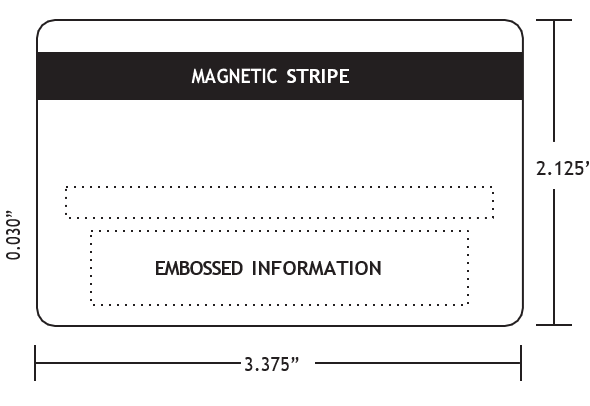
Physical characteristics of credit card size document
7811-1
Embossing
7811-2
Magnetic stripe - low coercivity
For copies of specifications contact: American National Standards Institute 11 W. 42nd Street, New York, NY 10036 212-642-4900
Some or all of the above Discretionary Data fields may be found with the discretionary data
A Field Separator (FS) must be used if an optional field is not used
The track formats used in this document are based on ISO Standards, however, other formats may be used. Contact your card issuer for your exact requirements
Amount Remaining this Cycle - 4
Cycle Begin (Validity Date) - 4
Cycle Length - 2
Retry Count - 1
PIN Control Parameters (optional) - 6
Interchange Controls - 1
PAN Service Restriction - 2
SAN-1 Service Restriction - 2
SAN-2 Service Restriction - 2
Expiration Date (optional) - 4
Card Sequence Number - 1
Card Security Number (optional) - 9
Cryptographic check digits (optional) - 6
Discretionary Data
79 alphanumeric characters
0.110"
ABA
75
5 bits per character
40 numeric characters
0.110"
THRIFT
210
5 bits per character
107 numeric characters
LRC