All pages
Powered by GitBook
1 of 1

Loading...

Important Information About Bluetooth LE

  • When calling functions startScanningForPeripherals or openDevice, the application should make sure bleReaderStateUpdated has received a device status and that the most recent status was OK , otherwise the device will not be able to connect, and iOS will not throw any error if Bluetooth is not ready.

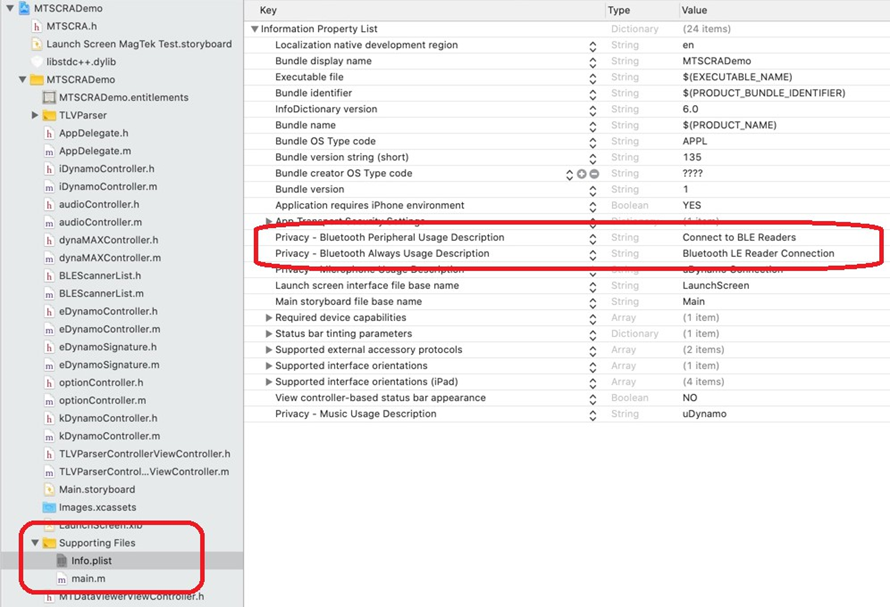
  • Starting in iOS 13, app projects must specify the Privacy Usage Description for Bluetooth by including NSUsageAlwaysUsageDescription in the info.plist file. Accessing Core Bluetooth without the usage descriptions will cause a runtime crash. For backward compatibility with older versions of iOS, define NSBluetoothPeripheralUsageDescription as well.

  • Make sure device is in pairing mode. If not, press and hold the button for 3 seconds until the blue light blinks, and then release the button.

  • Set device type and connection type.

  • Wait for callback bleReaderStateUpdated(), and then call startScanningForPeripheral().

  • Wait for onDeviceList() callback. Here you can call getDiscoveredPeripherals().

  • Select the device in the list.

  • Open the device you want to connect.

  • Library will pair the device. After inputting passcode, device is ready to use.

        self.lib.setConnectionType(UInt(BLE_EMV)) 
        self.lib.setDeviceType(UInt32(MAGTEKEDYNAMO))
func bleReaderStateUpdated(_ state: MTSCRABLEState) { 
    print("readerStateUpdated - ", state) 
    
    if (state == 0) { 
        // dispatch in main queue is very important 
        DispatchQueue.main.asyncAfter(deadline: .now() + 0.1, 
execute: { 
            self.lib.startScanningForPeripherals() }) 
        })
    }
}
        lib.stopScanningForPeripherals() 

        lib.setAddress(devList[selected].address) 
        lib.openDevice()